
Over the last few years, sports at the collegiate level have evolved, mainly due to major changes: the transfer portal and NIL. These new implementations in college sports have completely impacted the way athletes make decisions, how teams create their rosters, and even how fans view college sports. For many fans and non-fans of sports, the new system can seem confusing. However, once explained, the transfer portal and NIL are fairly easy to grasp and understand.
The transfer portal, in simple terms, is an online database that houses every college athlete and allows them to announce that they want to transfer schools. Before the creation of the portal, transferring to a different school was much more difficult. Coaches had a lot of control over whether student-athletes could contact other teams, and most of these students were forced to sit out a year before being eligible to play again. In today’s world of college athletics, when a player enters the transfer portal, other schools can now legally contact and recruit them. It’s basically free agency in professional sports.
Athletes can enter the transfer portal for pretty much any reason they feel is necessary. Some players leave due to things like a lack of playing time. Others may want to do so due to the simple fact that they want to be on a winning team, or there are better NIL opportunities elsewhere. The transfer portal gives student-athletes flexibility and control over how they want their college career to look. Many people believe this is fair since the coaches at these schools are able to leave whenever they’d like.
Though at the same time, many coaches and fans think that the transfer portal was a mistake and only created more problems. Some believe that athletes transfer too quickly when the going gets tough. Rosters can also change dramatically every season, like professional sports, because players are now constantly switching schools. Because of the constant changing of schools, fans have a harder time building connections with players who only play at the school for a year. Coaches now have to spend more time convincing their players to stay rather than only recruiting high school athletes.
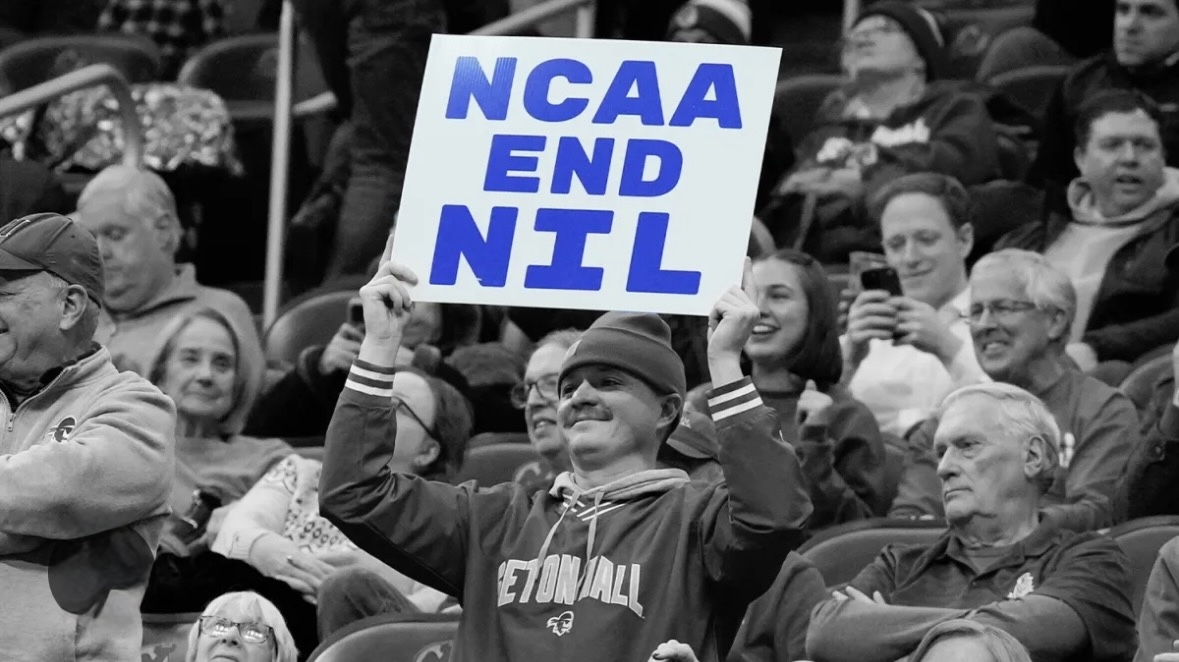
Name, Image, Likeness, or NIL for short, is a new rule in college athletics that started in 2021, which allows players to make money from their fame and popularity. Before the new NIL system in 2021, college athletes were forbidden from making money off of things such as endorsements, autographs, or social media promotions. Colleges and broadcasting companies made millions off their sports, but the athletes themselves didn’t make anything.
Now, student athletes are allowed to sign deals with brands and businesses. For example, a star quarterback could appear in a commercial for a local restaurant, or a basketball player could promote a clothing brand online. Some of these may only earn a few hundred dollars due to their popularity, but if one is famous, one could earn millions.
The supporters of the NIL system believe that these athletes should be able to get compensated because of how much money they help generate for schools and sports networks. On the contrary, many would argue that NIL has turned college athletics into more of a business instead of an activity. Many worry that schools with more money will have an advantage because they can attract more athletes with larger NIL opportunities.
The transfer portal and NIL have changed the landscape of college sports forever. The system’s main purpose is to give athletes more freedom and financial opportunities than ever before. Even with the ongoing debate between critics and fans, one thing is certain: college sports will never be the same.