There’s almost always a point in someone’s life when they don’t know what they want for the future and feel lost, especially during high school years. With juggling the constant stress of a heavy workload, maintaining a positive social life, extracurricular activities, and building relationships, it becomes difficult for students to pause and reflect on their plans after high school. Unfortunately, some people never make these plans and end up pursuing last-resort careers, part of which they are happy with and part of which they are not. So, what’s the prevention strategy for this?
To answer, schools should present students with their options for a future job, career, or lifestyle, while not pressuring them into it. This is highly prevalent at the high school, as many opportunities are available for individuals to “dip their feet in,” giving them a feel for different jobs. This includes job shadows, STEM days, Kirkwood classes, electives, and more. But one commonly overlooked, yet very important, factor is military visits. A handful of times a year, different branches, such as the Navy, National Guard, and the Marines, come to the high school for a day, whether it may be a table booth in the cafeteria or fun activities in gym classes. This is a good opportunity for students to take advantage of, as they can learn a large amount of new information about the career, what it is like, and they may even strike an interest in this path, if not any before.
Soldiers who are present are available to answer any questions or address concerns regarding the military. Have worries about it? They will calm those. One person in particular is Rodrigo Ramos. He serves in the Iowa National Guard and has been a recruiter at the high school for five years. As a recruiter, Ramos helps students find a path in the military and their future, and if the student decides to commit, he will help them prepare for training. His favorite part is being able to change someone’s life and turn it around for the better, helping them succeed. No matter the person signing up, Ramos and fellow recruiters are always willing to help anyone who needs it. Ramos said, “Despite whether they come from money or from the slums, the guard could fit just about any kind of personality.” He wants to create soldiers better than himself. Ramos recalls that when he was younger, he had a recruiter who did not pressure him to decide whether to join the military and who allowed him to explore different branches and what he wanted to do. So, Ramos said, “I am a recruiter for the National Guard, but maybe the National Guard isn’t for you.” He aspires to be supportive but not overly harsh toward students, as he understands the difficulty of decision-making. On average, five to six students enroll each year. Ramos and a group of soldiers from the National Guard visit the high school a couple of times a year, bringing self-defense, inflatable obstacle courses, and classroom workouts. One can find him and speak with him during these times if interested.
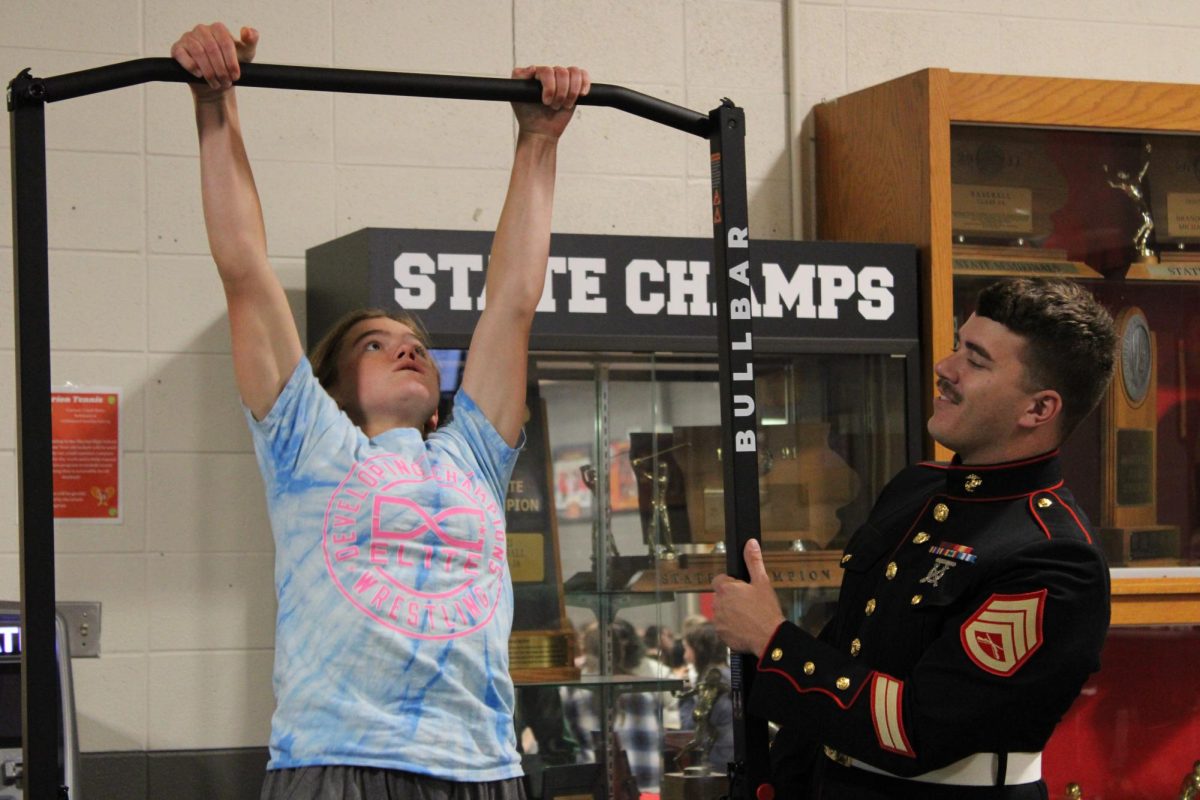
Recruiter Ramos isn’t the only soldier one can reach out to; other branches like the Navy, Marines, and Air Force come to the school, and similar to Ramos, they are all willing to help. One can find these soldiers a couple of times a year, usually during lunch cycles with a pop-up table. Sometimes, they even provide activities for students to do, such as push-ups, pull-ups, and more. Students can earn a reward, such as water bottles, pencils, keychains, or shirts. This is an attempt to draw more students into interacting and seeing the skills individuals have, aiming to recruit people.
Liam Kissling, junior, has started a six-year contract for the Army National Guard. He dedicates a lot of his lifestyle to the military, and enjoys the career. Kissling notes that when they come to visit, he believes it’s beneficial for many students, as it helps them explore viable career options. He said, “I think it’s a great way to learn about what soldiers do and how to enter,” and “It helps them break up some nerves if they want to join or learn new jobs they can do.” Kissling even had some nerves before enrolling, but once he got in touch with Recruiter Ramos, he felt better. He said, “He’s helped me through it.” Ramos had helped Kissling with preparing for exams and training, and it took a lot off his shoulders. He was very grateful for the recruiter’s assistance. Kissling also learned new information and has heard many other students gain some as well. He himself has participated in push-ups and pull-ups and has received such prizes for completing a specific number. Kissling believes this is a good way for students to be active and partake in what they would do in the military.
Overall, these visits to the high school are highly beneficial to students and make it possible for them to discover a potential journey. The military is a viable option for students to consider, as it offers gratifying service and free education. There are multiple opportunities each year to ask questions or learn more. For those who are interested, there is a helpful recruiter to look for. For those who aren’t interested, one can simply participate in activities to earn items. More high schools around the world should give this opportunity to students and allow them to find a light for their future.