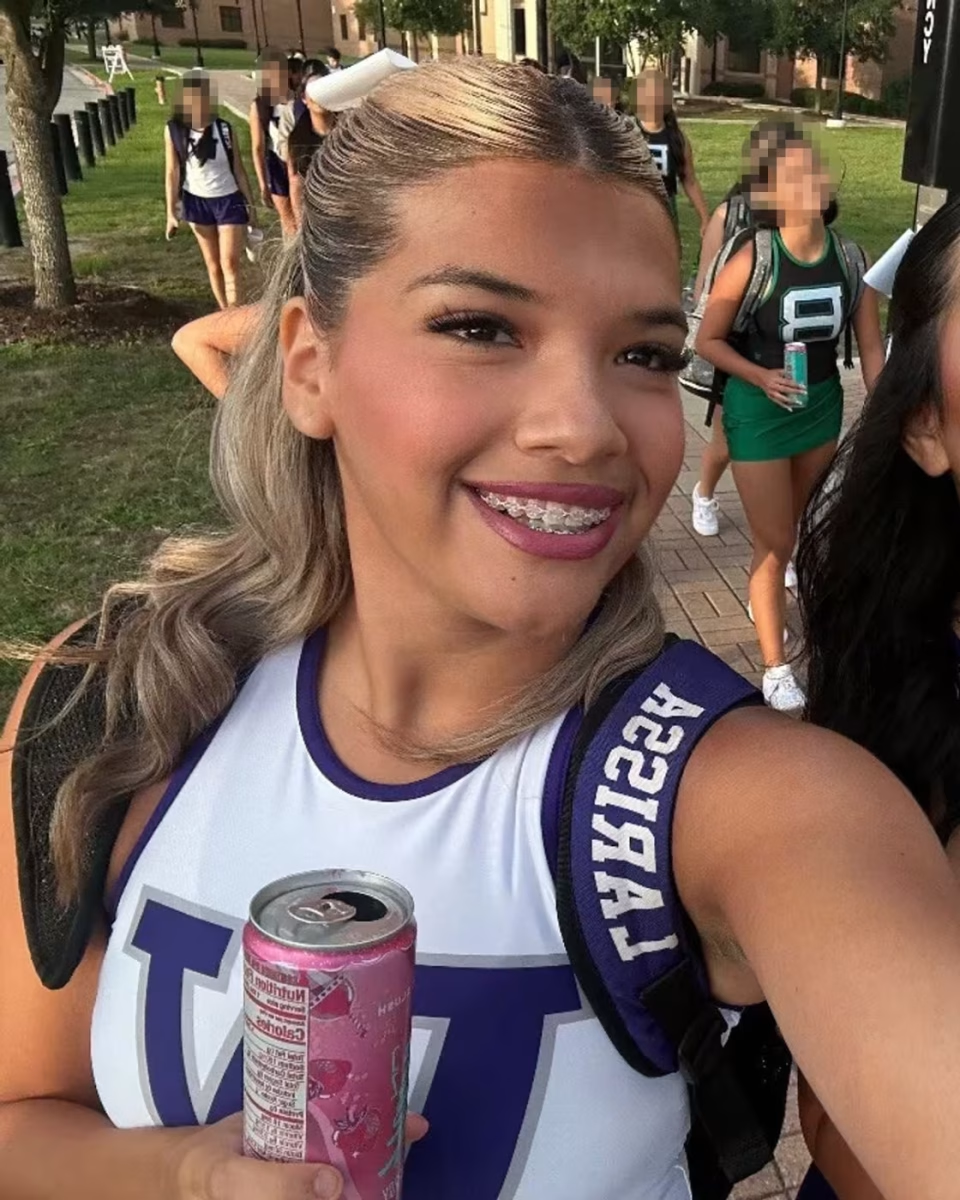
Every family bears the fear of losing a loved one at any point in their life; one can just hope their time together is as long as possible. Unfortunately, two parents in Weslaco, Texas, lost their only daughter to an unlikely killer. Roberto Rodriguez Jr. and Jennifer Alicia Rodriguez had to endure something no parent should have to. 17-year-old Larissa Nicole Rodriguez was born on Dec. 7, 2007. She participated in the cheer team and was student council president for Weslaco High School, where she attended. Rodriguez was described as, according to NBC News, “Agosto said that Rodriguez was ‘full of life, full of love, smart, academic, and with a bright future.’” She could always be seen with friends, playing tennis, cheering, and with an Alani Nu energy drink.
As of Oct. 20, 2025, 17-year-old Larissa Nicole Rodriguez was pronounced dead due to an enlarged heart, caused by stress and large amounts of caffeine. She had no previous heart issues or conditions, and there was no evidence of alcohol or other substances. The Rodriguez family filed a wrongful death lawsuit against Glazer’s Beer and Beverage, LLC, and Glazer’s Beer and Beverage of Texas, LLC, the distributors of Alani Nu energy drinks. The suit seeks over $1 billion for the death, claiming there were “inadequate warnings” of the side effects the drink provides. According to NBC News, “The lawsuit alleges that Alani Nu targets its marketing to young women and minors through social media and that it advertises the drink as a wellness and lifestyle beverage, but it says the drink lacks proper warnings, including consumption limits and possible dangers.” The attorney of the family, Benny Agosto Jr., argues that Rodriguez was one of these victims, fooled into believing that the drink was healthy, as advertisements and social media show.
The popularity of this case has struck recently, and left many people to wonder about the fault of this case, and reflect on their own caffeine intake. Rylee Hutchins, a sophomore, drinks Alani Nu Energy, approximately three cans a week, with a daily maximum of three. Her favorite flavor is Pink Slush. She is aware of the 200 milligrams of caffeine in each serving, not varying based on flavors. Hutchins drinks energy drinks to stay awake throughout a school day and to give her energy. She has heard about the case of Rodriguez and said, “It’s not good that she died, but you [Rodriguez] drank a lot of caffeine.” She expressed that although the death has not had much of an effect on her consumption habits, it has made her more aware of how much she is consuming, and to ultimately slow down.
Lately, she recognizes that she hasn’t been drinking as many Alanis as she wants to cut down. Hutchins agrees with Agosto’s point: as she said, “the advertisements and social media posts of every energy drink today can be deceiving.” Seeing Alani energy drinks on TikTok, on other social media, and even her peers with these helped get her into these beverages.
There is no further information about the case, as it is in the early stages and has not gone to trial. The lawsuit was officially filed in April 2026. No date is set for the trial. The Rodriguez family has one goal: to warn about the dangers of high-caffeine energy drinks, and their goal is working. Many parents around the U.S. have limited their children’s caffeine intake, and some even restrict them from energy drinks overall. It has even caused teens to open their eyes and realize the unhealthy effects and amounts of this substance they are consuming.