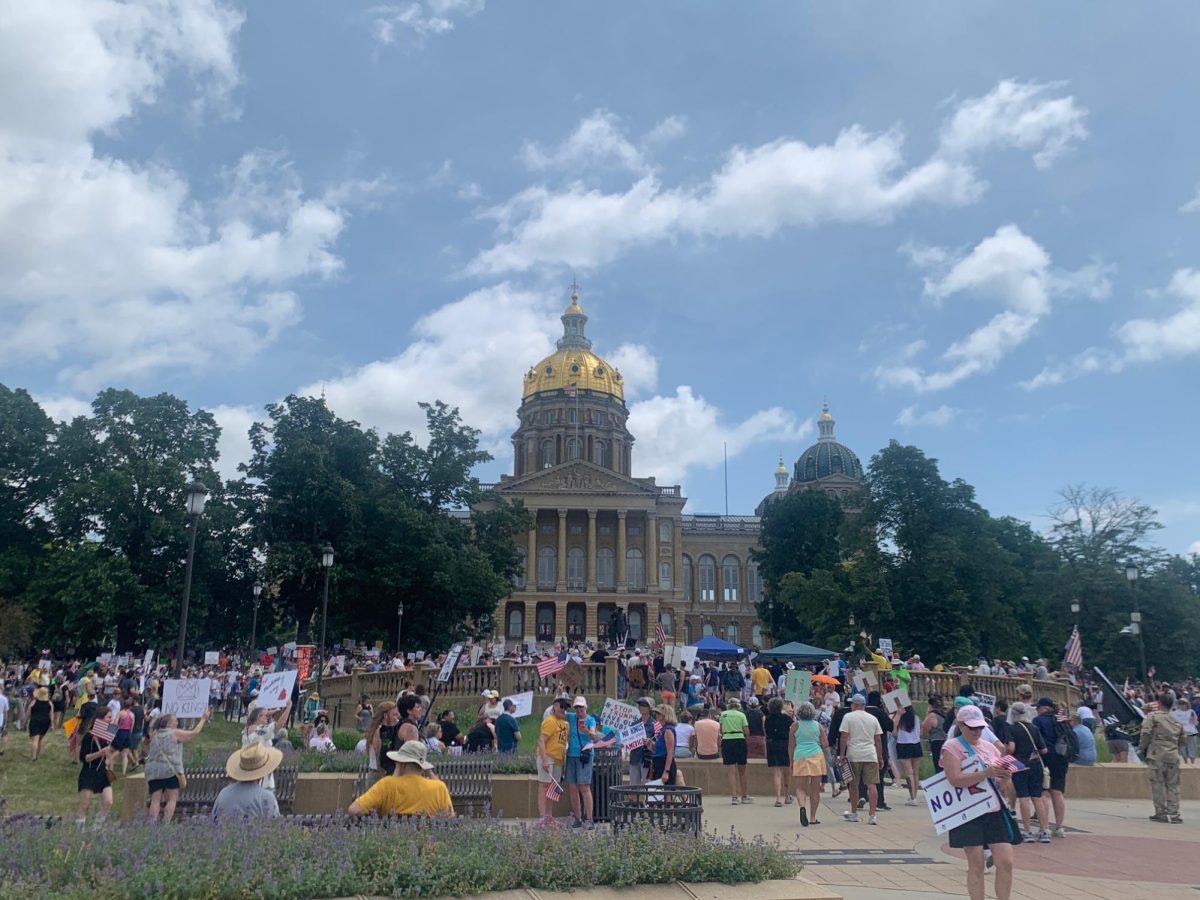
Civil protest is rapidly evolving, and younger generations are at the forefront. Often organizing around critical political quarrels, they rally around the issues that define their generation. While students exercise their First Amendment right to public assembly, the question shifts from whether they should protest to what their actions must achieve. The collective voice of a generation seeking a difference carries weight. Yet, veteran politicians and student organizers alike agree that real-world impact is measured by palpable, lasting results; whether it’s sustained policy change, new community programs, or broader cultural awareness.
Jack Hatch, co-founder of Grassroots Iowa Network (GIN) and former Iowa state senator, has an extensive history of public action, dating back to the first Iowa Hunger Hike in 1969, which brought funding and attention to hunger nationwide. For Hatch, the current surge in youth activism is a visceral, however necessary, response to challenges against fundamental rights. Hatch said, “Your First Amendment right, and your right of assembly, are being challenged right now,” noting that efforts to shame or prosecute individuals for speaking up have unintentionally driven deeper engagement. This overreach has infuriated people of all ages, fueling the demand for action. Yet, for Hatch, the opposition itself is only the start of a much longer campaign. “I’ve never been a person that wanted just to protest. There had to be a positive result, a product, if you would,” said Hatch.
The “product” of public outcry extends far beyond just demonstration. Hatch and the high school’s students both highlight the necessity for constructive, sustained engagement to prevent a movement from dissipating into just venting. Concrete steps, such as voter registration, deep involvement in campaigns, writing letters to an editor, or simply becoming more informed on the current political and economic climate, are what transform dissatisfaction into real change. “It’s not just a protest, but rather creating the steam that drives the result,” Hatch stated. Without this second phase of action, the impact of assembly, even on the most enormous scale, loses momentum. GIN focuses heavily on “citizen engagement,” linking new activists with experienced organizers.
Cadence Pastor, a junior who attended a “hands-off” education dissent in Cedar Rapids, shared how collective assembly strengthens morale, saying that the event “made you feel like you weren’t alone.” Attending a rally allows her to actively contribute, rather than sitting on the sidelines powerless, as a minor unable to vote. Yet, she recognizes the limits of attendance. “While protest is important to raising awareness and utilizing the First Amendment right of peaceful assembly, it should be paired with actual change,” Pastor said. She continues to cite the Civil Rights Movement, pointing to moments when activists achieved long-lasting legislative reform through strikes and boycotts, forms of economic and social pressure that brought about lasting effects.
Lasting alterations often come from those willing to push back. Hatch, whose business, Hatch Development Group, builds affordable housing in communities impacted by natural disasters, embraces this pushback, seeing it as an opportunity to spark dialogue that leads to better laws. “It does take a lot to get something changed…” he said, emphasizing the work required to turn action into a product. He points to his work as an Iowa state senator on healthcare legislation as a clear example; after approximately five years of consistent effort, Iowa reached the highest per capita rate of insured children in the United States, nearly 99 percent. That success was later eroded by policy shifts that dropped the rate significantly, highlighting the real consequences of policy decisions on vulnerable populations.
For students considering action, the common sentiment of feeling like “only one person” can be a paralyzing issue. Hatch dismisses this emotion, using a sports analogy: “Everybody has a role to play, not just the quarterback; everybody adds something. Your contribution may be small, but it’s not insignificant. And, believe me, there are thousands of people who feel the same way.” Pastor supports this perspective, arguing that thinking of oneself as an individual may be “selfish” in the sense that the issue affects more than just one person; it impacts communities. For example, kids who rely on school food, or elderly residents whose well-being is directly threatened by cuts to essential resources like SNAP or Medicaid.
Today, mass gatherings provide critical reassurance that activists are not alone. But for those truly dedicated to civic engagement, the real work starts once the signs are down. The accurate measure of a student movement lies in deliberate, sustained effort. From postcards to policy that follows the initial rally, activists work to ensure awareness is converted into an enduring political or social product. As Hatch and Pastor reiterate, it isn’t just the crowd; it’s the follow-through. The letters written, the votes cast, the lives reworked. Each small action adds up, turning a single protest into a lasting force for making amends, and showing that even one voice, when joined by thousands, can change the future.