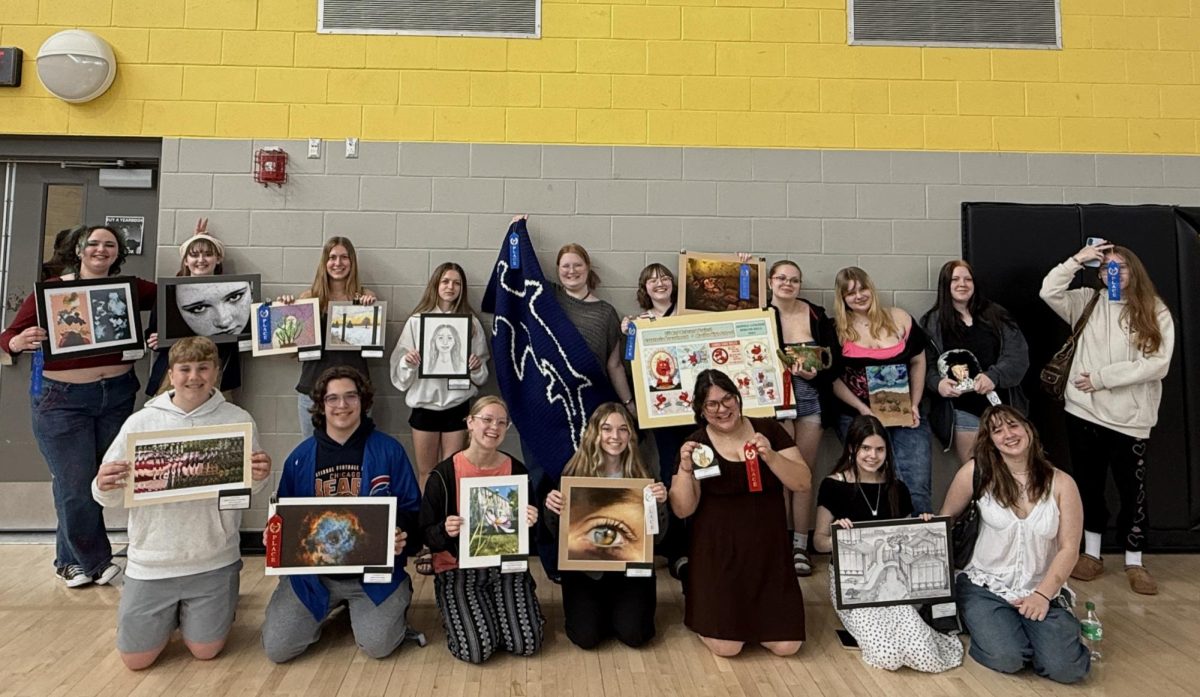
Six first-place, three second-place, and three third-place ribbons later, Marion has cemented itself in the WaMaC Art Show history books as an up-and-coming school filled with skilled, young artists—or has it? The rivalry between fine arts and athletics becomes more and more extreme every year, with publicity, society, and academics favoring the latter. Throughout the 2024–2025 school year, 8.2 million high schoolers across the country participated in sports extracurriculars, those of which had adequate funding as well as local, state, and national support. Simultaneously, the first and second Trump Administrations strove to dismantle the National Endowment for the Arts (nationwide funding for education, projects, and nonprofit organizations), various museum and library agencies, and “gender ideology-promoting” art and music programs labeled as “DEI-based”.
During scenarios like these, where creative communities are being denounced, the WaMaC Art Show becomes a vital addition to high school culture. This competition and others like it were designed to inspire creativity and promote teamwork, like any other activity or event, so its value should be recognized in an ever-changing cultural and political landscape. Unfortunately, the same challenges these students face outside of art are the exact same obstacles found in the Art Show itself: representation, appreciation, and informative critiques. For those who participate, the Art Show’s lack of publicity and favoritism towards specific artists has taken its toll on their opportunities for growth, as suggested by past participants themselves.
Jennifer Thilges has been teaching art and graphic design at the high school since 1998. Having witnessed the dramatic changes in the creative world, such as the rise in digital mediums or artificial intelligence’s interference in the community, she regards the WaMaC Art Show as a beneficial experience for all of her students. “Students attending the event usually have a positive experience, walking away with exposure to a variety of art mediums and styles,” Thilges said. “When students exhibit art for competitive purposes, there is a certain level of growth that happens, either by inspiring them to try something new or simply participating in a juried art show.” The event presents a wide array of eclectic and personal pieces, all of which have an equal opportunity to gain recognition, win an award, or capture hearts. But has anyone even heard of the WaMaC Art Show? “I believe there could be more publicity surrounding the WaMaC Art Show as a whole,” Thilges said. In addition to managing the Art Show’s advertising, Thilges uses her own resources to print artwork, set up transportation, and reserve restaurants for her students. She found the competition’s style and promoting methods to be counterproductive, saying, “When I think of the Art Show versus sports or other activities, typically, there are events and games leading up to finals, qualifications, rounds, et cetera in order to hype up the big event. With WaMaC Art, it’s one single event; everyone comes together that day, and then it’s over.”
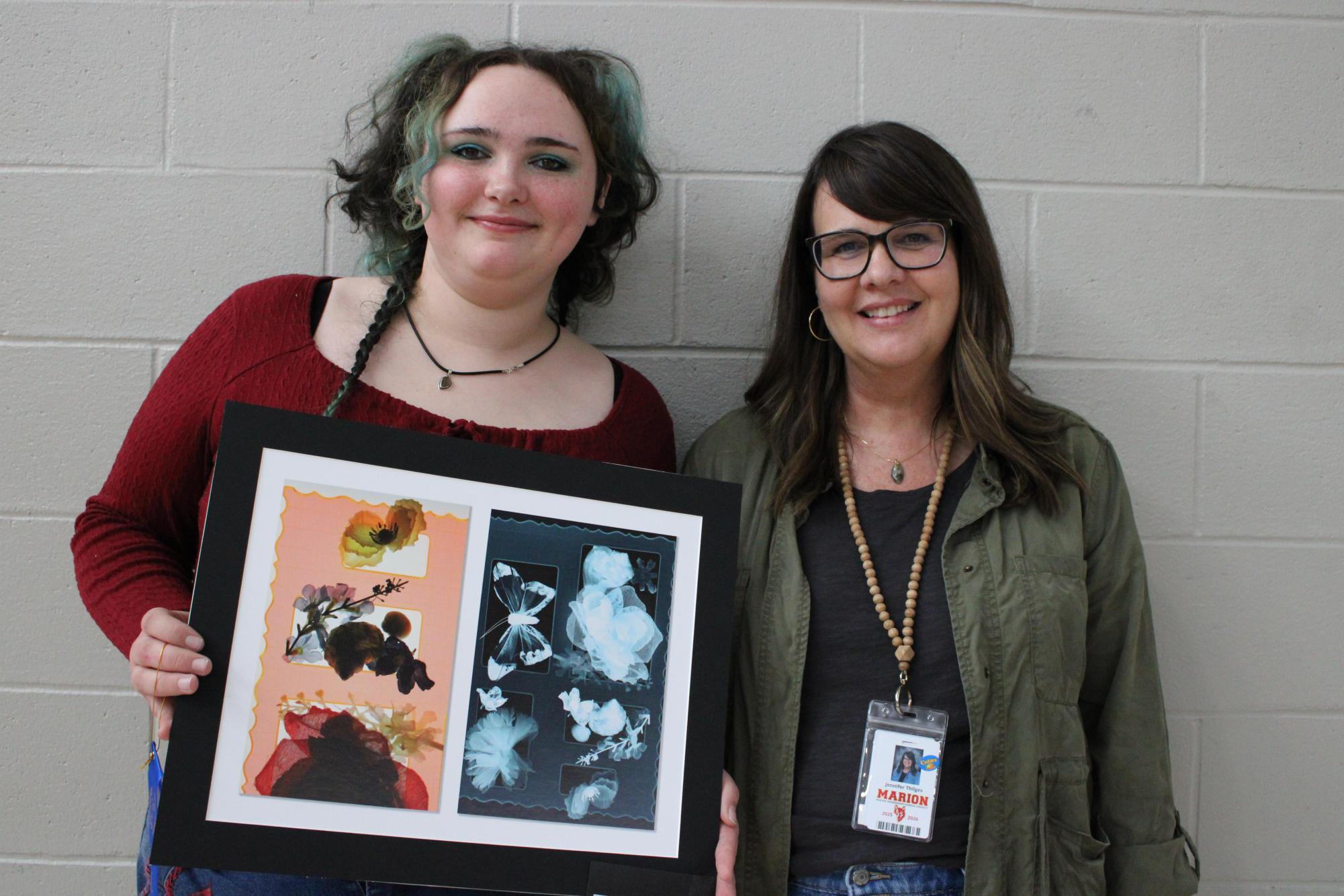
For future events, Thilges anticipated stricter rules with guidelines that regulated artwork submissions and whether or not their subject matter was original. She suggested more diverse judging, holding exhibitions outside of the WaMaC Conference, and hosting workshops at the Art Show as a way to help students engage with a new skill. Along with viewing the developing art world as unpredictable, she felt it yielded great opportunities for self-exploration. “The art world is constantly evolving, and the big idea is how artists adapt to these changes,” she said. “It is what you make it, and if artists choose to incorporate new technologies into their creative processes, it has to be what works for them. Art is and will always be a form of personal expression.” An educator’s perspective is a necessity for creating context and seeing change throughout decades of teaching a wide variety of students, but a competing artist provides a different narrative.
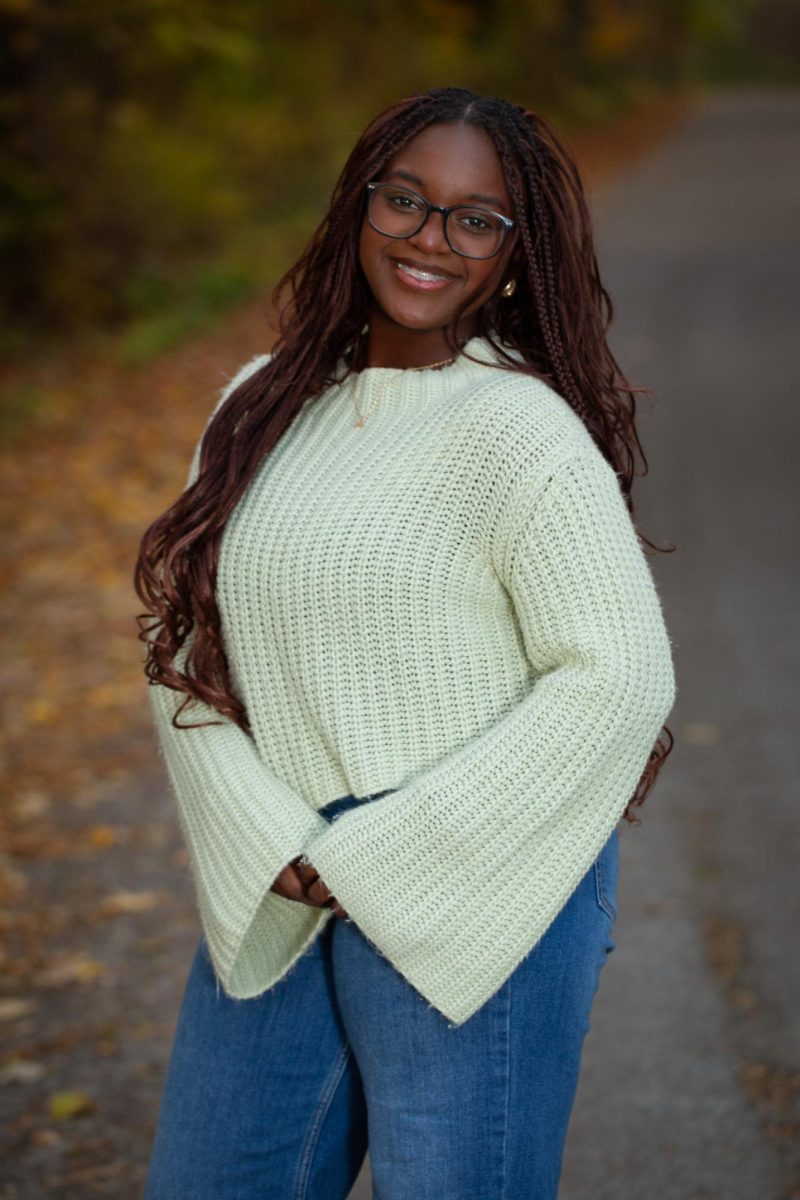
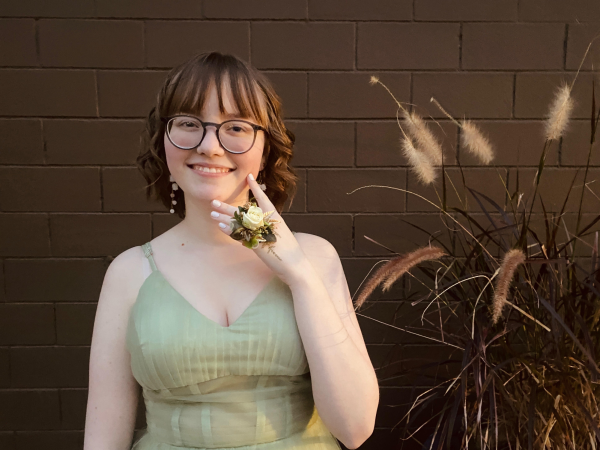
Bre Hoff, junior, has involved herself in several activities, including jazz, concert, and marching band, show choir, and the WaMaC Conference’s related competitions. After participating in the 2025 and 2026 Art Shows, Hoff developed an insightful assessment of the event. “Artists put lots of meaning into their works. I think that some people view artists who do so as ‘different’ or out of the ordinary, when really they just want to express themselves,” Hoff said. “Art seems to lack publicity and is often overlooked by sports and is instead viewed as a hobby. Sports are based on pride, community, and team building. Art, on the other hand, is viewed as a way of expression that questions or has an impact on social norms. The work and dedication behind the artwork are almost forgotten or unappreciated.” In contrast to Thilges’s view, Hoff believed the competition lacked informative critique, learning experiences, and equal opportunities. “I feel that WaMaC hasn’t really shaped me at all as an artist,” she said. “I feel like it should, but it hasn’t really helped much when it comes to improving my art, and I believe there is room for WaMaC to grow in ways that artists feel are helpful.” Additionally, Hoff did not view the Art Show’s level of diligence as parallel to other extracurriculars. While she and Thilges displayed differing views of the WaMaC Art Show, both called for change in the competition’s execution, its publicity, and its appreciation.
Is the WaMaC Art Show as beneficial as it set out to be? The event is on its own journey of self-discovery, no matter how long it has been in practice, much like the artists and educators who find themselves participating. Art is not simply a hobby. It’s a method of communication, experimentation, and unity. Political and social barriers should not reject this movement, only influence it in every way possible. Athletics, which holds the exact same principles of community as any creative activity, should not be held in higher regard because it is traditional. Sports, fine art, or any other extracurricular should receive honor due to its union, not its division.