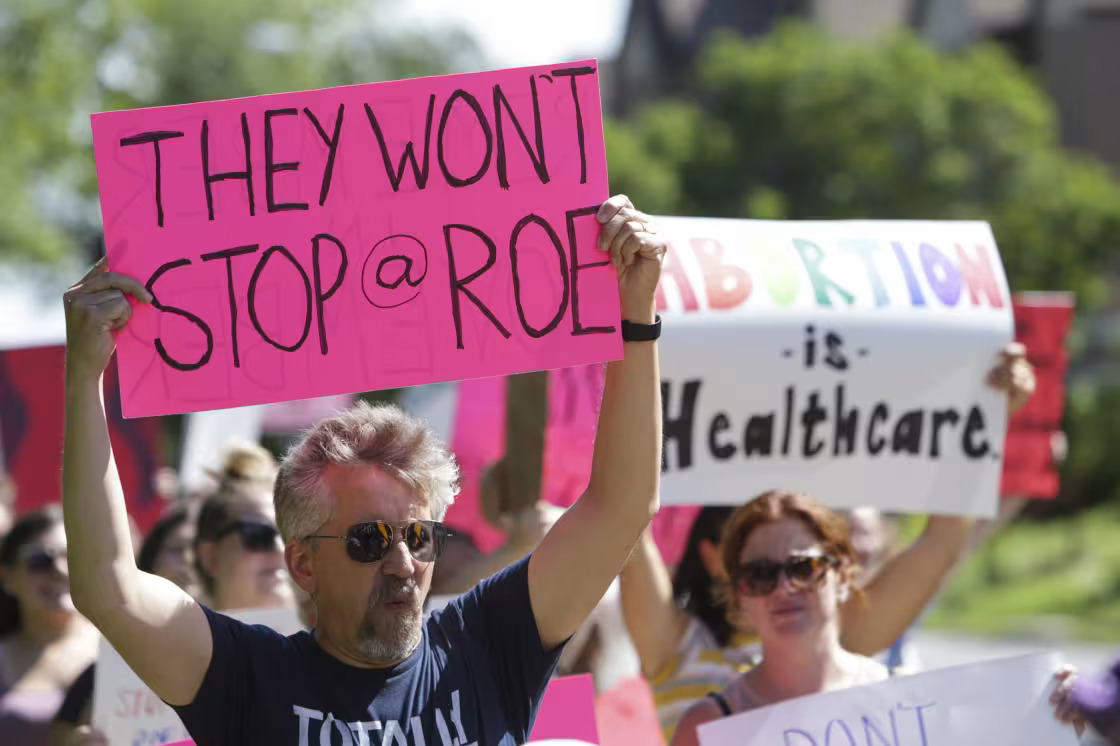
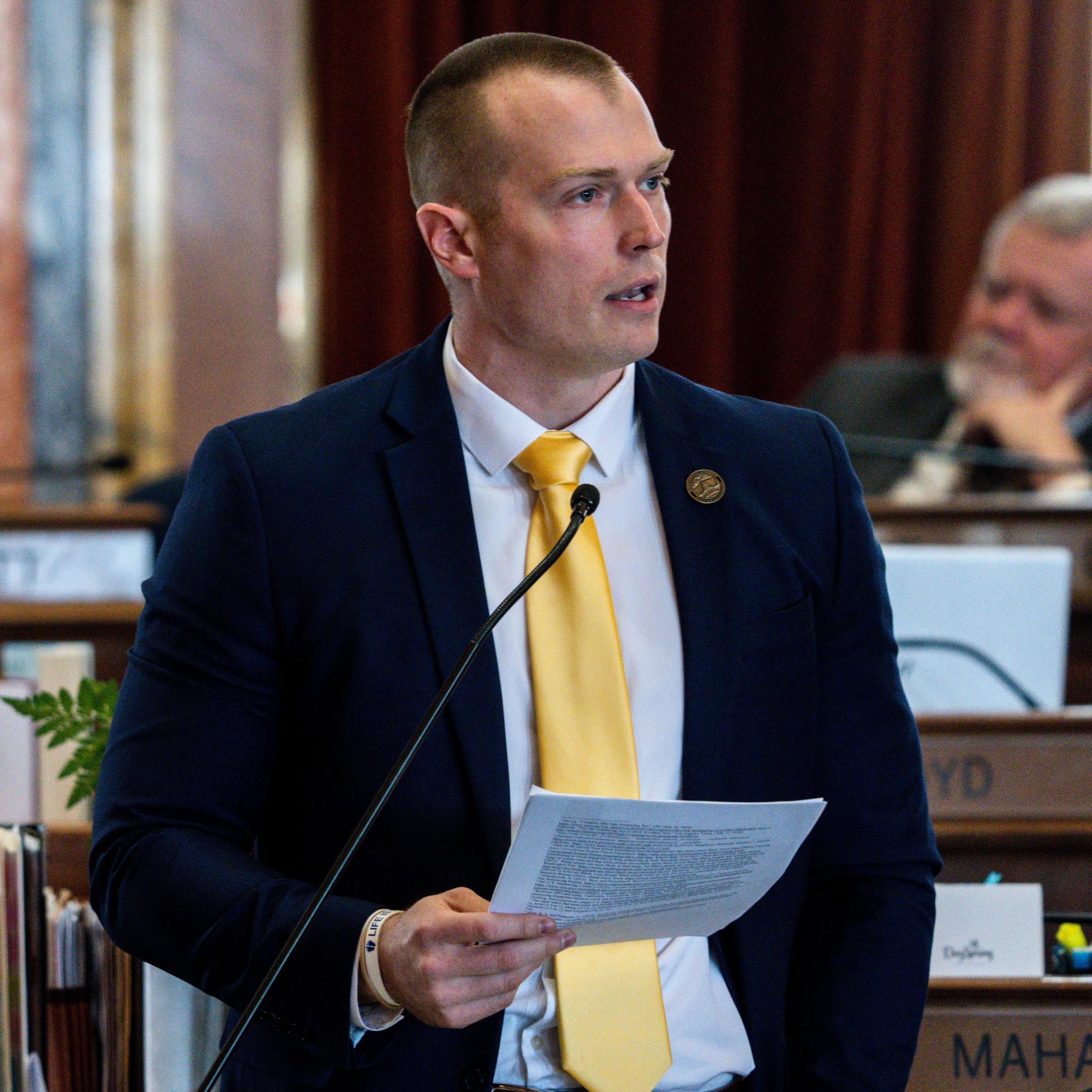
Abortion has been a sensitive topic since its conception—no pun intended. Millions of American women find themselves torn when defining their ethics, questioning if religious morals, political stances, or medical advice are the right choices for their bodies. While they should definitely be able to have that discussion with friends, family, physicians, and themselves, advocacy for abortion bans and regulations has become a major obstacle. Conversations have turned away from the world of women’s health, morphing into religious and political arguments with little room for medical evidence of the practice’s benefits and flaws. In the first week of February, Iowa State Representative Zach Dieken filed House File 2316, a bill that would turn the practice of performing an abortion or getting an abortion into a form of child homicide. Along with the religious undertones of the proposal, a statement Rep. Dieken provided to CBS affiliate KCCI included a clear manipulation of the state’s political landscape, saying, “Iowa Republicans have nearly complete control of the state government and supermajorities in both chambers of the Iowa General Assembly. There is no excuse to avoid passing legislation that would finally treat abortion as murder.” Conflicting views on medical practices, ethics, religion, politics, and women’s rights all play a role in this massive debate. Each branch of the conversation contributes to the reason why people argue about abortion laws. While these viewpoints have their respective places at the table, where do politicians and religious leaders without any medical credentials or experience fall? Rep. Dieken, who called for “a biblical answer” in state politics, “our nation, and the world” in “times that are as dark as ours,” wanting “Christian faith to play a bigger role in government,” has greatly compromised the separation of church and state. When did the topic of abortion exit the medical world and become overrun with political and religious biases?
Abortion, performed through either a surgical procedure or a prescription of misoprostol and mifepristone, has been subjected to criticism. While deciding to have an abortion may range from financial and educational reasons to more serious cases like rape, incest, or fatal illness, pro-life advocates claim the practice to be dangerous and unnecessary. Following the overturning of Roe v. Wade (a 1973 case that established a woman’s constitutional right to an abortion) in 2022, the Journal of the American Medicine Association reported that rape resulted in over 64,000 pregnancies in the 14 states that outlawed abortion. Nearly 59,000 of those cases occurred in states with no abortion exceptions for rape. Yet pro-life advocates do not feel abortion is a valid extension of women’s healthcare, even if she is carrying a baby conceived through rape. In a 2025 report from the National Institutes of Health (NIH), abortion is described as a very common and beneficial procedure that 1 in 4 American women will receive in their lifetime, adding that advancements in reproductive healthcare—such as successful abortions performed in countries with less restrictive laws—can reduce maternal mortality rates. This study referenced another article, one from the National Abortion Federation (NAF), saying, “According to NAF’s 2020 Clinical Policy Guidelines for Abortion Care, patients seeking an abortion must receive nonjudgmental counseling about their available options. The patient’s preferences should be explored, and options such as continuing the pregnancy, parenting, adoption, and termination of pregnancy should be discussed during this time. If the patient decides to terminate the pregnancy, the benefits, risks, and details of the procedure must be clearly explained. Avoiding further stigmatization of abortion care requires refraining from terms such as ‘medically necessary’ and ‘therapeutic,’ as they imply that some abortions are unnecessary. While these terms may be useful in policymaking, clinical practice should focus on counseling patients according to their individual goals.” As reported by NIH again, using Brazil as an example, recipients of medical abortions found the misoprostol and mifepristone route to be less invasive, less expensive, and responded favorably towards receiving little to no physical trauma and having support throughout the process. While they voiced concerns for potential bleeding, pain, or a failed abortion, 84 to 90 percent of recipients found the previous characteristics to be advantages of the process. UCLA Health revealed that 98 percent of surgical abortions and 95 to 97 percent of medical abortions were successful, with very little room for internal damage, major discomfort, or infection during or after the procedure. Additionally, the American College of Obstetricians and Gynecologists stated in their abortion policy that, “ACOG supports every person’s right to decide whether to have children, and the number and spacing of children, and to have the information, education, and access to health services to make these decisions. Individuals seeking abortion must be afforded privacy, dignity, respect, and support, and should be able to make their medical decisions without undue interference by outside parties. ACOG advocates to improve access to full-spectrum reproductive services, to integrate abortion as a component of mainstream medical care, and to oppose and overturn efforts restricting access to abortion.” In a 2021 study conducted by the Collaborative for Reproductive Equity, 78 percent of physicians supported abortion, with 99 percent concerned about legislation interfering with doctor-patient relationships and their ability to work effectively. As laws change from day to day, the mix of politicians’ personal opinions comes dangerously close to their work, even spilling over into their offices and committees. This unprofessional combination only harms state legislation, preventing laws from benefiting all residents, not just a singular group with which the politician is affiliated.
(Courtesy of the Des Moines Register)
A majority of Americans turn to religion or pre-established beliefs for a sense of security or closure, a practice that is perfectly fine and encouraged by the Constitution. However, anti-abortion arguments and policymaking rooted in religious language compromise the separation of church and state. Along with the recurring concept that abortion harms the fetus, the idea that it destroys potential, or using terms such as “infanticide” or “feticide,” the use of religious lenses in pro-life ideas and policymaking steers the conversation more than other viewpoints, as seen in Rep. Dieken’s language. Additionally, these arguments rely on rumors and claims, also seen in House File 2316. Its contents claimed that women were being “pressured” by physicians and family, stating that those who perform, encourage, or have an abortion will encounter legal action under the classification of homicide. When Iowa legislators are not permitting people to “solicit, command, aid, or counsel a pregnant woman to abort a child,” they are writing up more abortion bans. Upon the cancelation of the hearing for House File 2332—a bill similar to House File 2316 in which doctors performing abortions would be apprehended if passed—Iowa House Representative Jon Dunwell released a statement on Facebook: “While I remain deeply committed to protecting life from the moment of conception, the current legislative landscape and timing are not optimal for our caucus to advance this measure effectively this session.” Instead of continuing with the subcommittee, he called for a crackdown on “the dangerous black-market flow of abortion pills into the state.” “These unregulated chemical abortion drugs not only pose serious health risks to women—through complications like severe bleeding, infection, and other emergencies—but also illegally take the life of the unborn child in a way that bypasses our state’s protections for preborn life,” he said. “Addressing this immediate threat is both timely and critical to safeguarding the health and safety of Iowa women while upholding the sanctity of unborn life.” In contrast to Dunwell’s claims, the World Health Organization (WHO) found medication or procedural abortions to be safe and highly effective. Anti-abortion arguments linger on operations not performed by licensed or trained physicians that often lead to hemorrhage, infection, and permanent or fatal damage to the woman’s internal organs. However, in a 2022 study published by NIH and its Library of Medicine, it was reported that 88 percent of abortions were performed by physicians and 12 percent were performed by advanced practice clinicians. This group included a qualified variety of OBGYNs, advanced practice nurses, pediatricians, emergency medicine clinicians, and many more. While Reps. Dieken and Dunwell claim women are being “pressured” into getting abortions or are getting their medication through the black market. The practice is only one of many recommendations given by experienced healthcare providers when discussing a hazardous pregnancy. It is heavily monitored, highly successful, and certainly not forced upon women. Rep. Dieken’s bill tried going further into specifics, but did not leave a lot of room for other exceptions. Section three of House File 2316 claims that the law would not apply to the unintentional death of an unborn child, including life-saving procedures and miscarriages. For people who do not support operating on the female body for her benefit, where do they stand on other procedures that can be qualified as life-saving? Are ectopic pregnancy treatments, D and E procedures for stillbirths, or miscarriages that require a D and C procedure to maintain the health of the mother, not legitimate life-saving methods? With the ACOG finding pregnancy termination to be an effective method to combat hemorrhages, conditions such as sepsis, or pre-existing health complications, how is abortion not the life-saving procedure Rep. Dieken is looking for? If women are unable to get treatment or a necessary procedure to prevent the jeopardization of their health, reproductive issues, other long-lasting health concerns, and death are all likely consequences.

(Courtesy of NBC News)
When issues of women’s rights or the separation of church and state come into play, pro-choice or anti-abortion arguments become rather feral. However, the primary concern is the physical, mental, and social well-being of the woman in question, and it should not extend much further than that. “Inaccessibility of quality abortion care risks violating a range of human rights of women and girls, including the right to life; the right to the highest attainable standard of physical and mental health; the right to benefit from scientific progress and its realization; the right to decide freely and responsibly on the number, spacing and timing of children; and the right to be free from torture, cruel, inhuman[e] and degrading treatment and punishment,” said WHO, later adding that “restrictive abortion regulation can cause distress and stigma, and risk constituting a violation of human rights of women and girls, including the right to privacy and the right to non-discrimination and equality, while also imposing financial burdens on women and girls.” Abortions performed by unlicensed or untrained people and the consequences of those operations should not reflect upon the medical practice, its healthcare providers, or its proven effectiveness. Proposals like House Files 2316 and 2332 linger on rumors, failed abortions that were not performed by licensed physicians, and pre-established religious and political biases. When Rep. Dieken calls for the recognition “that innocent human life, created in the image of God, should be equally protected under the law from fertilization to natural death,” abortion’s status as a topic worth exploring is overshadowed by non-medical interference.
With Rep. Dieken being labeled as “God’s deacon” and “one of God’s legislators,” or Rep. Dunwell being the director of outreach and engagement at The Family Leader, which is a “conservative Christian group with a strong influence in Iowa politics,” there is reason for concern about the separation of church and state. As Iowa is a red state, any Republicans with shared sentiments easily drown out opposing voices, leaving opinions on abortion severely one-sided. Along with the prevalence of Christian anti-abortion arguments among the Party, another layer of age-old views cements the state’s legislation. Stances based on pre-established ethics are legal and encouraged by the Constitution, but once it starts endangering the physical and mental health of another demographic, there is yet again a debate rooted in immorality. Men of immense power, strong religious biases, and zero medical experience, like Reps. Dieken and Dunwell do not have the qualifications to tell a woman what she can and cannot do with her body. Abortion has become less of a medical topic and more of a religious and political argument. Bans prevent women from exploring their options in cases of jeopardized health, some in which abortion is a genuine method to preserve their well-being and manage illness. It becomes a women’s healthcare rights issue, not one to be decided by those who lack knowledge on the subject. Her body is not a political party, nor is it defined by one religion. It is defined by her and what she feels is best.